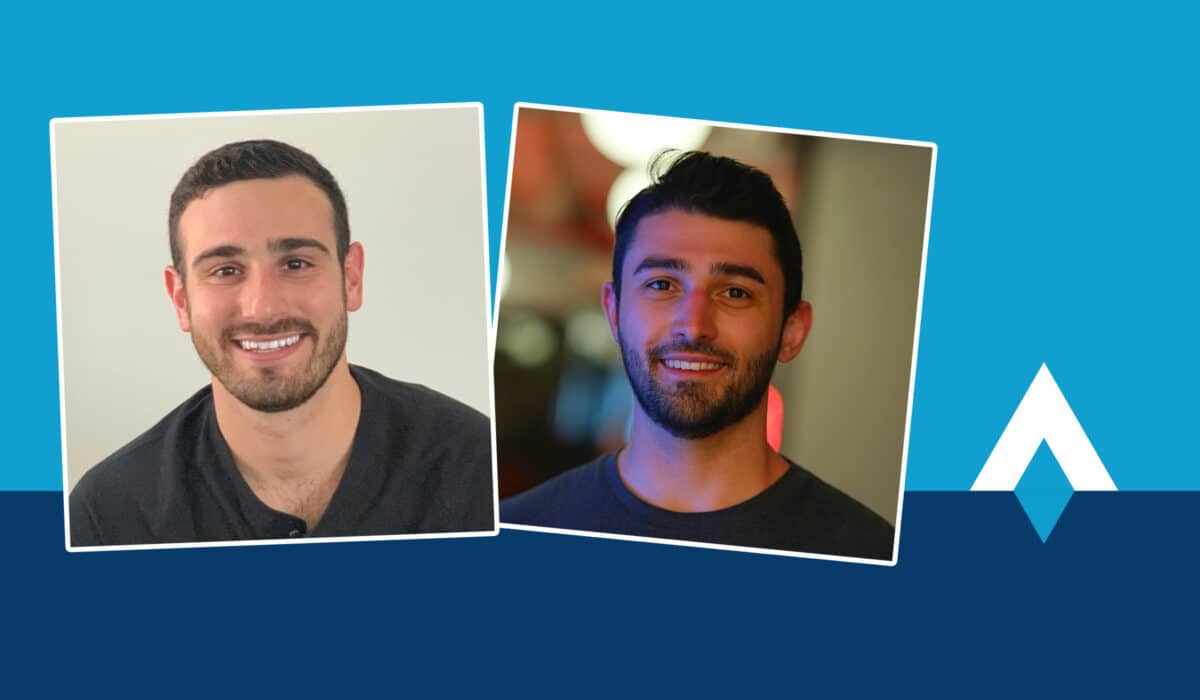
Around seven years after Chris Buetti and Austin Rosenthal launched Lionize, they began looking for a buyer.
But they weren’t ready to walk away from the influencer marketing platform.
“We wanted to stay and continue working on the project, so we wanted to be properly incentivized,” Buetti said. “If an acquirer had come to us and said, ‘We’ll give you a zillion dollars, but you and Austin are out,’ we probably wouldn’t have done it.”
That’s why finding the right buyer aligned with their mission — and a deal structure they could benefit from over the long term as Lionize continued to grow — became so important.
The inception of Lionize: “I kind of got shut down”
In 2018, Buetti worked as a data scientist for the National Basketball Association. There was a big push for the marketing team, which he sat next to, to work with more social media influencers, but they were struggling to make these connections with the tools they had, he recalled to Net Influencer.
“I brought this up to my manager a few times and said, ‘Hey, I think I could help these guys. I think I could help build something that would make their lives easier,’” he said. “I kind of got shut down.”
So, Buetti began treading into the world of influencer marketing on his own time, exploring brands’ pain points and building software. That’s how Lionize began as “a data science project that turned into a software platform that turned into a company,” as he described. Rosenthal, a friend and fellow Wake Forest University alum with a background in business development, joined him.
Instead of just providing a pool of creators to choose from, Lionize used AI to help brands and agencies match with influencers, automate campaign execution and track performance.
Its AI agent, Lilly Bella, analyzed more than 20 attributes across 30 million creators’ profiles on Instagram and TikTok to recommend the right influencer to brands, based on audience demographics, content style and format. These weren’t just major celeb influencers. Micro and nanoinfluencers with smaller followings were less expensive — and often had higher engagement rates.
Lionize grew its customer base through viral content, Buetti told us. An article he posted to Medium titled, “How I Eat For Free in NYC Using Python, Automation, Artificial Intelligence, and Instagram,” received nearly 12,000 “claps” and 90 comments — and funneled frustrated marketers to Lionize.
Signing up for Lionize was free, and users only paid once influencers posted about their brand. They also offered two paid tiers — Boost and Managed Service — that let brands and agencies tap into more automated features and dedicated support.
One of the biggest challenges Buetti and Rosenthal faced when growing the business was building trust with brands as the influencer marketing space became increasingly saturated.
“We overcame this by doubling down on transparency and measurable outcomes,” Buetti said. “We built tools that showed detailed campaign performance metrics and ensured our onboarding process focused heavily on education and setting clear expectations. Once clients saw the value and ease of use, word-of-mouth referrals helped fuel growth organically.”
Lionize raised $6 million total, including a $3 million Series Seed investment and another $2 million in February 2024.
By 2024, annual recurring revenue was $1.5 million.
Finding a buyer for Lionize — and the right deal structure
When Buetti and Rosenthal began looking to sell, they knew they weren’t ready to walk away from Lionize. They simply wanted to focus more on the technology — and let another company handle the sales and revenue side of the operation.
Lionize also wasn’t yet profitable. “We were purposefully investing heavily in growth and marketing,” Buetti told They Got Acquired.
They worked with an M&A advisor, RockWater, which provides financial and strategy advisory for media, agencies and the creator economy. That’s how they met gen.video, an influencer marketing platform that focuses on social commerce and tools to help with content collaboration.
Buetti told Net Influencer that gen.video’s established revenue engine and agency relationships, combined with their technological focus, made them an ideal partner.
“They were looking for something like us,” he said. “We were looking for something like them. It just worked well in terms of being able to fill the gaps on both sides.”
The strategic acquisition also aligned with Buetti and Rosenthal’s long-term goals to continue to help grow the SaaS.
When it came to deal structure, Buetti and Rosenthal ended up with a 7-figure combination of stock and cash.
“If we had done a cash deal, it would have given us instant satisfaction, but not the long-term collaboration,” Buetti said. “We ended up doing a deal that was a combination of both.”
Typically in deals where investors are looking for a return, cash from the acquisition goes toward paying off investors first, before the founders take home any money from the sale.
After the acquisition, Buetti joined as the chief of data and AI officer, and Rosenthal joined as chief operating officer.
“Fortunately for us, we were very headstrong in what we wanted going into [the acquisition],” Buetti said. “We wanted to continue building — we just wanted to join the right team to do it with.”