When it comes to selling your business, choosing an M&A advisor or business broker is one of the most critical decisions you’ll make.
You don’t want just any broker. You want the right broker, someone you can trust.
We’ve interviewed hundreds of founders who’ve sold their businesses, and we’ve seen it all: horror stories of deals gone sideways with the wrong advisor, and success stories where the right partner made all the difference in getting a life-changing exit.
So how do you find a broker who’s right for you? Let’s break it down.
How to find a business broker that’s right for you
Need help finding a broker to sell your business? We match founders with advisors who have experience selling your type of business and come recommended by other founders.
What exactly does a business broker do?
First things first—let’s clarify what we’re talking about.
A business broker—also called an M&A advisor—helps you sell your company. They’re like a real estate agent, but for businesses. The good ones don’t just find buyers; they help you maximize your business value, negotiate better terms, and guide you through what can be a complex and stressful process.
Here’s what a quality broker typically handles:
- Valuing your business
- Creating marketing materials
- Finding and vetting potential buyers
- Negotiating deal terms on your behalf
- Managing due diligence
- Shepherding the deal to closing
Most brokers work primarily on commission, meaning they only get paid when your business actually sells. This aligns their incentives with yours—they want to get you the best deal possible.
Do you actually need a business broker?
Before we dive into finding one, let’s address the elephant in the room: Do you even need a broker?
The honest answer? It depends.
You might not need a broker if:
- Your business is worth less than $500,000 (broker fees would eat up too much of your proceeds)
- You already have a great buyer lined up who’s offering above-market value
- You’re comfortable handling negotiations, due diligence, and legal complexities yourself
You probably want a broker if:
- Your business is worth $500,000 or more
- You want to maximize your sale price through competitive bidding
- You’ve never sold a business before
- You want someone in your corner who knows how to spot red flags
- You’d rather focus on running your business while someone else handles the sale
We’ve seen plenty of founders successfully sell without a broker, but we’ve also seen many who wished they’d used one after leaving money on the table or getting stuck with unfavorable terms.
Step 1: Know what type of advisor you need
Not all business sale professionals are created equal. Here’s the breakdown:
Business brokers/M&A advisors: Handle deals typically ranging from $500K to $20M. Most work on commission only, though some charge upfront fees for larger deals.
The terms “broker” and “M&A advisor” are typically used interchangeably nowadays; they essentially mean the same thing.
Investment bankers: Focus on bigger deals, usually $20M+. They provide more comprehensive support but charge higher fees and usually require significant upfront payments.
Specialty advisors: Some advisors focus exclusively on specific industries (like SaaS, agencies, or e-commerce). They often have deeper expertise and better buyer networks for your type of business.
For most founders reading this, you’re looking for an M&A advisor who specializes in your industry and deal size.
Step 2: Find advisors who specialize in your type of business
This is huge. The broker who sells local restaurants, for example, probably isn’t the right fit for a SaaS business.
Why industry expertise matters:
- They understand how to value your specific type of business
- They know what buyers in your industry look for
- They have relationships with the right buyers
- They can spot opportunities others might miss
For example, a traditional broker might not realize that online businesses often sell for higher sale multiples than brick-and-mortar businesses. Working with someone who doesn’t understand your industry could cost you serious money.
How to find specialists:
- Ask in industry-specific forums or groups
- Look for advisors who regularly write about your industry
- Check their recent sale listings—do they include businesses like yours?
- Ask other founders in your space for recommendations
Step 3: Get recommendations from people you trust
This, too, is critical. Don’t work with a broker just because they approached you. You want someone recommended by actual founders who’ve been through the process.
Who to ask:
- Other entrepreneurs in your network who’ve sold
- Your lawyer or accountant (if they work with business owners)
- Industry groups or mastermind communities
- Online founder communities
Questions to ask those referrers:
- What was it like working with this advisor?
- Did they deliver what they promised?
- How did their valuation of your business compare to the actual sale price?
- Would you use them again?
- Any surprises or things that could have been better?
Don’t have a network of exited founders? That’s where we come in. We’ve interviewed hundreds of founders about their sale experiences, so we know which advisors consistently deliver results. Our free matching service connects you with vetted advisors who specialize in your type and size of business—and who come recommended by other founders.
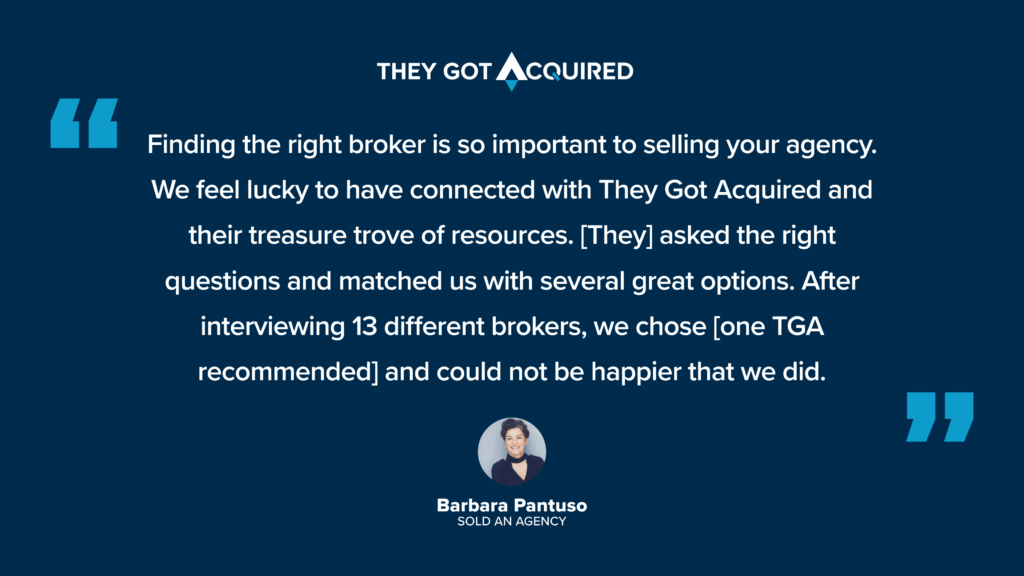
Here’s what one founder said about our matching service:
Step 4: Understand how M&A advisors charge
Broker fees vary significantly, so make sure you understand what you’re signing up for.
Common fee structures:
- Success fee only: They only get paid when you sell, typically 6-15% for 6- and 7-figure deals
- Upfront fee + success fee: Some charge preparation fees ($5K-$50K+) plus a lower success fee
- Monthly retainer + success fee: Popular with specialty firms and larger deals
Neither model is inherently better—it depends on your situation and what level of service you need.
For most businesses under $1M, success-fee-only arrangements make sense. For larger or more complex deals, paying upfront for additional preparation and expertise might be worth it.
Learn more about broker fees and what you can expect to pay.
Step 5: Interview multiple advisors
Don’t just go with the first advisor you find. Interview at least three to compare their approaches.
Key questions to ask:
- Can you show me examples of businesses like mine that you’ve sold?
- What’s your typical process and timeline?
- How do you find and vet buyers?
- What’s your success rate (percentage of listings that actually sell)?
- Can I speak with some of your recent clients?
- How many deals are you working on simultaneously?
- What’s your communication style and expected response time?
Red flags to watch for:
- Unrealistic valuation promises (“I can definitely get you $X”)
- Pressure to sign immediately
- Can’t provide relevant references
- Vague answers about their process
- Claims they can sell any type of business
Step 6: Get a valuation (and see how the broker works)
Many quality advisors offer free business valuations before you commit to working with them. This serves two purposes:
- You get insight into what your business might be worth
- You get to experience their work style and expertise
Keep in mind that a valuation isn’t a guarantee—it’s an educated estimate based on current market conditions and comparable sales.
If someone gives you a valuation that seems way off (either too high or too low), ask them to explain their reasoning. A good advisor should be able to walk you through their methodology and show you comparable sales data.
Don’t fall into the trap of choosing one advisor over another simply because they valued your business higher. Some brokers inflate valuations or quote on the optimistic side because they want to land your business. You want a realistic valuation, not an over-promised one.
Step 7: Trust your gut
You’ll be working closely with your advisor for months, often in high-stress situations. That’s why your relationship matters as much as the expertise.
Ask yourself:
- Do I trust this person to represent my interests?
- Can I see myself sharing sensitive business information with them?
- Do they listen well and address my concerns?
- Would I be comfortable calling them in a crisis?
If something feels off, pay attention to that feeling. Your exit is too important to ignore red flags just because someone has impressive credentials.
Step 8: Check their track record
Don’t just take their word for it—do some digging.
What to research:
- Recent deals they’ve worked on (check their website or LinkedIn)
- How long their listings typically stay on the market
- Average sale price compared to initial valuations
- Any public complaints or disciplinary actions
Good signs:
- Regular success stories from happy clients
- Transparency about their process and results
- Active in your industry (speaking, writing, networking)
- Other professionals (lawyers, accountants) refer clients to them
Common mistakes to avoid when choosing a broker
Based on our interviews with hundreds of founders, here are the biggest mistakes we see:
- Choosing based on fees alone. The cheapest option isn’t always the best value. A great advisor who gets you 20% more for your business is likely worth their higher fee.
- Working with generalists. The broker who “sells everything” probably doesn’t excel at selling your specific type of business.
- Not checking references. Always, always talk to previous clients before signing. (Or let us do this for you via our matching service!)
- Ignoring gut feelings. If something feels wrong during your initial conversations, it probably is.
- Expecting miracles. No advisor can guarantee a specific sale price or timeline. Be wary of anyone who promises unrealistic outcomes.
Alternative ways to find buyers without a broker
If you decide not to work with a broker or you can’t find one that is willing to take on your business, you have a few other options.
Pitch buyers directly: Many founders successfully reach out to potential buyers themselves. This works best if you know your industry well and can identify strategic buyers.
Use a marketplace: Platforms like Empire Flippers, Flippa, or Acquire.com can connect you with buyers. They typically charge lower fees than full-service brokers but require more work on your end.
Get approached by a buyer: Sometimes buyers come to founders. Of course, this is impossible to manufacture, but we’re including it here to add this important tip: If this happens, don’t immediately say yes to the first offer—try to create competition by finding additional interested parties.
The bottom line for choosing a great M&A advisor
Finding the right broker or M&A advisor can be the difference between a good exit and a great one. Take time to do your research, get recommendations, and trust your instincts.
Remember: you’re not just hiring someone to find a buyer (though that’s important). You’re hiring an advocate who will fight for your interests, help you avoid costly mistakes, and guide you through one of the biggest transactions of your life.
Need help finding the right advisor for your business? We’ve made it our mission to connect founders with trustworthy advisors who specialize in their industry and deal size. Our free matching service is based on insights from hundreds of founder interviews, so you can skip the guesswork and connect with advisors who consistently deliver results.
The right partner is out there—you just need to know how to find them.